Commercial Waste Tring — Recycling and Sustainability
 Commercial Waste Tring takes an active role in creating an eco-friendly waste disposal area for businesses across Tring and the surrounding boroughs. Our approach combines clear operational targets with practical measures: we work with local transfer stations, support reuse through charity partnerships, and operate a low-carbon van fleet to reduce emissions from collections. This page outlines our sustainability strategy for the Tring commercial rubbish and waste sector and explains how local business owners can support a greener, more resource-efficient town.
As part of our commitment to the sustainable rubbish area, we set an ambitious recycling percentage target for our commercial clients: a 70% recycling rate by 2030 across all business streams. To achieve this we profile waste streams, improve segregation at source, and collaborate with the boroughs' approach to waste separation — encouraging separate food and garden organics, paper and card, plastics and cans, and glass recycling where local policy supports it. This separation aligns with county requirements and helps reduce residual waste sent to landfill.

Practical Partnerships and Local Infrastructure
We rely on a network of nearby transfer stations and recycling centres to sort and process commercial materials efficiently. Tring and nearby Hertfordshire transfer stations provide access to bulking facilities, materials recovery facilities (MRFs), and composting sites. By routing collections to the most appropriate transfer station, our Tring commercial waste services reduce vehicle mileage and ensure recyclables are handled by specialist operators. We also maintain close operational links with county recycling schemes and multi-borough consolidation points to maximise diversion from landfill.Reuse and Charity Collaborations
A sustainable rubbish area includes reuse, and we prioritise partnerships with local charities and social enterprises. Clothing banks, furniture reuse charities, and local community groups receive items diverted from commercial waste where quality and safety allow. We sort donated office furniture, textiles, and small electricals for redistribution or repair, supporting the circular economy and local social value initiatives. These collaborations help reduce waste, support vulnerable residents, and extend the life of products that would otherwise become commercial refuse.To help clients audit and reduce waste we provide easy-to-follow service options and recommend action plans tailored to different business types — retail, hospitality, offices, and light industry. Suggested actions include improved on-site separation, targeted staff training on recycling streams, and scheduled reuse pickups for bulky items. We encourage businesses to adopt the boroughs' separation guidance — such as separate food waste collections where available — to ensure higher quality recycling outputs and better material recovery.
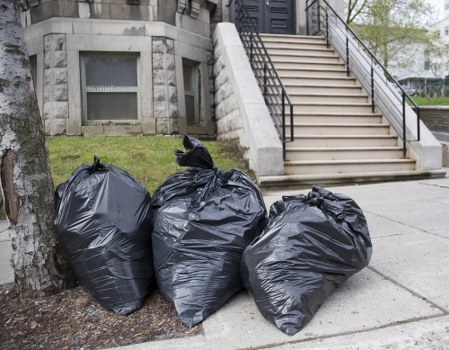 Low-Carbon Collections are central to our low-emission strategy. Our fleet includes electric and hybrid vans as well as low-emission Euro 6 vehicles for heavier loads, reducing the carbon footprint of local collections. Route optimisation, consolidation of pick-ups to transfer stations, and scheduled bulk collections for commercial cardboard and pallets further reduce vehicle kilometres. These operational improvements support Tring's aim for an eco-friendly waste disposal area and help businesses demonstrate lower Scope 3 transport emissions.
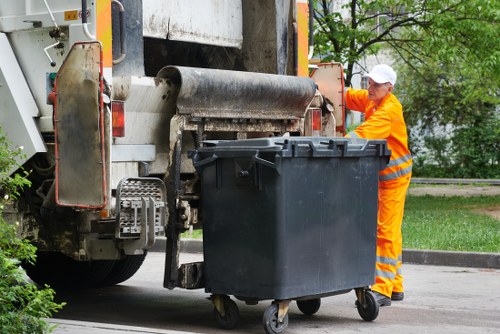 Materials We Handle — Our services accommodate a broad range of recyclable and reusable commercial materials. Typical activities include:
- Paper, card and cardboard baling for retail and office waste streams
- Mixed plastics and metals routed to MRFs for sorting
- Glass by colour separation where local collections permit
- Food and organic waste diverted to anaerobic digestion or composting facilities
We also partner with specialist contractors for hazardous or specialist wastes, ensuring compliant, safe handling and documentation. For businesses operating in multiple boroughs we can align collection formats with the relevant council's waste separation rules so your waste streams remain compliant and recyclable no matter where you trade in the region.
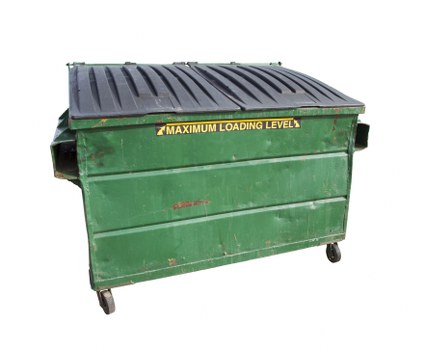 Reporting, Targets and Community Benefits — We provide clear monthly reporting so clients can track progress against the 70% recycling target and measure reductions in landfill and transport emissions. Our reports include tonnages by waste type, diversion rates, and CO2 savings from low-carbon collection options. Businesses can use these metrics to improve procurement, reduce single-use materials, and document sustainability performance for stakeholders and green certification schemes.
In summary, whether you refer to our service as commercial rubbish Tring, Tring commercial waste, or a local supplier for the eco-friendly waste disposal area, our integrated approach delivers measurable sustainability outcomes. By combining transfer-station logistics, charity reuse networks, clear segregation aligned to borough rules, and a low-carbon van fleet, we help create a resilient, circular local economy that reduces waste, saves resources, and benefits the whole community.
