Health and Safety Policy — Commercial Waste Tring and Associated Rubbish Services
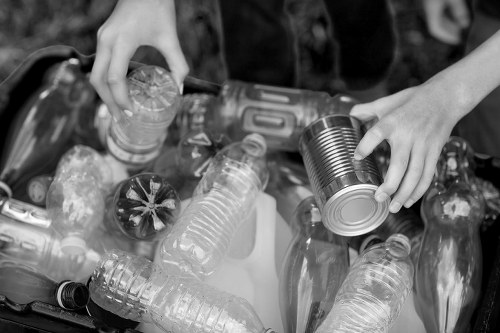 This Health and Safety policy sets out the commitment of our commercial waste operation to provide a safe working environment for employees, contractors and visitors involved in business waste collection and commercial refuse services. The policy applies to all aspects of our rubbish company activities, including collection, transportation, handling, storage and transfer of waste materials. Our goal is to prevent injury, ill health and environmental harm through clear responsibilities, robust systems and continuous monitoring.
The scope covers routine collections, on-site container servicing and any ancillary duties performed by operatives and drivers. It includes commercial waste streams such as general refuse, recyclables, bulky items and designated non-hazardous commercial recyclate. The policy explains how risk assessments are completed, how controls are implemented and how staff are trained to manage hazards inherent in waste services without reliance on localised legal detail.
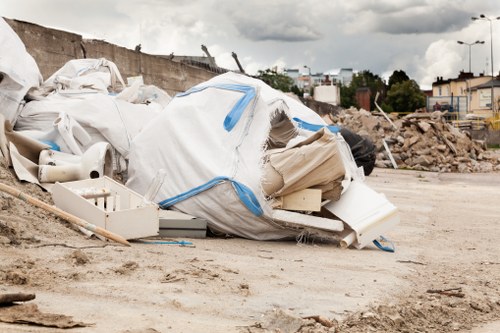 Management, supervisors and front-line employees share responsibility for health and safety. Senior management will ensure resources are available for safe plant, properly maintained vehicles and appropriate personal protective equipment, while supervisors will oversee safe systems of work and on-the-ground compliance. Employees and operatives must follow instructions, report hazards and participate in training. Where external contractors support our rubbish collection service, they must demonstrate safe working practices and cooperate with our safety regime.
Hazard Identification, Risk Control and Training
We maintain a programme of risk assessments covering collection routes, depot operations and transfer station procedures. Common hazards addressed include manual handling, vehicle movements, slips/trips, sharps, hazardous residues within commercial refuse and mechanical plant operations. Controls include route planning, safe loading protocols, segregation of waste streams, mechanical aids and exclusion zones. Regular training ensures staff understand risks and controls and are competent to operate equipment safely.
The workforce receives practical and refresher training in manual handling, safe lifting, use of lifting equipment, and correct bin and container handling techniques. 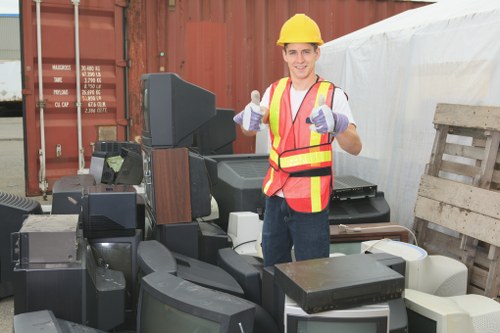 PPE requirements are defined for each task and enforced; typical items include high-visibility clothing, gloves suitable for different waste types, safety boots and eye protection. Training also covers how to identify suspect hazardous wastes and the procedures to secure and isolate such items pending specialist removal.
Safe systems of work are documented and accessible. Supervisors carry out daily briefings and dynamic risk assessments prior to shifts. Maintenance schedules for vehicles and plant are implemented to reduce the risk of mechanical failure. Any equipment defects trigger immediate removal from service until rectified and recorded.
Operational Controls, Transport Safety and On-Site Measures
Operational controls reduce exposure to common risks in waste collection services. Vehicle safety measures include pre-shift checks, secure load practices, safe reversing procedures and the use of dedicated parking and loading zones at client premises. Drivers and crews are trained in route risk management and in how to approach commercial properties to avoid public interface hazards while completing bin lifts and transfers.
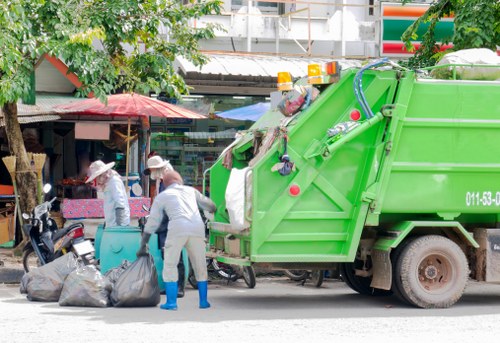 Contractors and subcontractors engaged for specialist disposal or transfer must meet our safety standards and provide evidence of competency. Documentation, including risk assessments, method statements and insurance records, is reviewed before work begins. We conduct periodic safety audits and spot checks to maintain consistent standards across the service area, and non-compliance is addressed promptly with corrective actions.
 Emergency response arrangements cover spill containment, first aid and fire prevention. Incidents and near misses are reported immediately, investigated and recorded to identify root causes and prevent recurrence. Records of training, inspections, maintenance and incidents are retained to demonstrate compliance and to support continual improvement. Performance metrics are reviewed with operational teams and fed into planning cycles to ensure that safety keeps pace with service demand.
Key elements of this policy include:
- Clear accountability: defined roles for management, supervisors and crews;
- Risk-based controls: assessments, method statements and safe systems of work;
- Competence: induction, task training and refresher sessions for all staff;
- Equipment safety: maintenance, inspection and removal of faulty plant;
- Incident management: reporting, investigation and corrective action.
We commit to monitoring and reviewing this policy periodically to reflect changes in operations, new industry best practice and feedback from the workforce. Continuous improvement in our commercial refuse collection and business waste management activities is achieved through audits, operational reviews and staff engagement. Safety and sustainability go hand in hand; reducing risk supports reliable rubbish company performance and protects employees, customers and the environment.
All employees are expected to play an active role in delivering the aims of this policy by following procedures, wearing required PPE and stopping unsafe work. Supervisors will support this culture by providing guidance and ensuring compliance with safe working standards. Non-conformance will be managed fairly and promptly to maintain high standards across all waste services.
Signed and endorsed by senior leadership, this Health and Safety policy for commercial waste services is the foundation for safe operations, safe crews and safe communities. It is reviewed at least annually and updated as necessary to remain effective and relevant to the evolving needs of our waste collection and rubbish service activities.
